
Personalized Stress Management Support in Victoria and Online
Stress management is essential for maintaining both your mental and physical well-being in today’s demanding world. You’ve likely felt the weight of stress pressing down on you at some point in your life. Your heart races, your muscles tense, and your mind can’t seem to slow down. It’s a natural response, but when left unchecked, stress can harm both your mental and physical health.
The good news? You don’t have to let it control you. With the right stress-management techniques, you’ll find that managing stress isn’t just possible; it’s a skill you can master for a more balanced life.
Key Takeaways
- Regular exercise releases endorphins that help reduce stress and boost mood with just 30 minutes of daily activity.
- Try mindfulness meditation or deep-breathing exercises to quickly relax and reduce cortisol levels.
- Build and maintain strong connections with friends and family to help protect against stress and build resilience.
- Use cognitive strategies like positive self-talk and gratitude journaling to change negative thought patterns.
- Add stress-reducing activities such as yoga, tai chi, or gardening to your daily routine.
Understanding the Body’s Stress Response
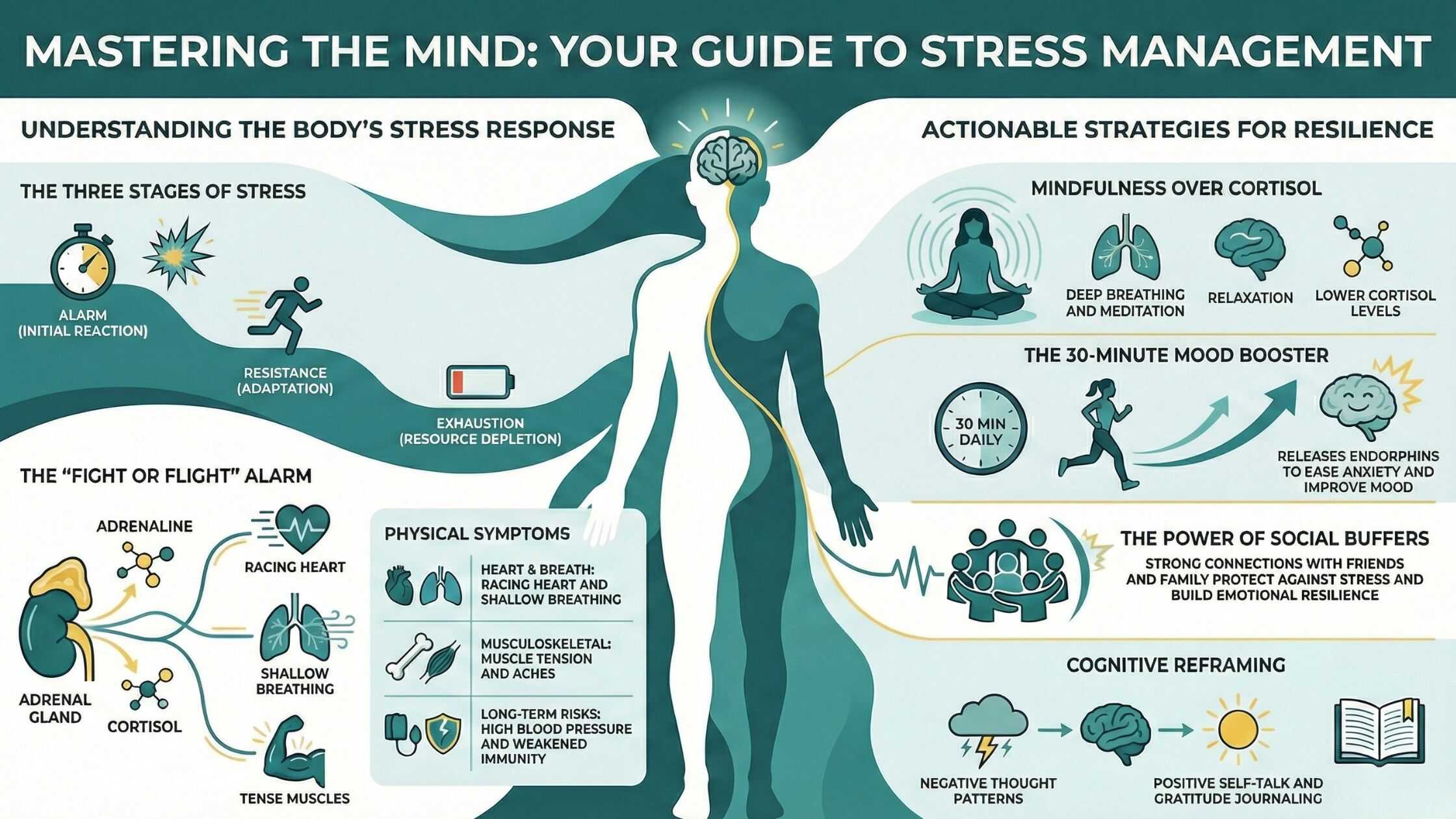
When you face a stressor, your body sounds an internal alarm. Your brain signals your adrenal glands to release adrenaline and cortisol, preparing you for “fight or flight.” This natural response occurs in three stages: alarm (your first reaction), resistance (when you adapt), and exhaustion (when your resources run out under long-term stress).
Physical symptoms, such as a racing heart, shallow breathing, tense muscles, and digestive troubles, are directly linked to this ancient survival system. However, when stress becomes ongoing, this same response can damage your health, causing high blood pressure, weakened immunity, and mental health issues.
Good health starts with recognizing your personal triggers and physical responses. By spotting these patterns, you can develop tailored strategies to address your body’s specific responses before they become health problems. Working with a counsellor can help you identify these patterns more effectively and develop targeted coping mechanisms.
Physical Activities That Reduce Stress
When stress takes hold, your body craves movement as a natural remedy. Regular exercise triggers endorphin release, which acts like a powerful mood lifter that helps to ease stress and anxiety. Just 30 minutes of daily physical activity can greatly improve your mental health and boost your emotional well-being.
Consider adding yoga or tai chi to your routine. These practices combine physical movement with mindfulness, promoting relaxation through deep breathing and focused attention. Victoria offers beautiful outdoor spaces such as Beacon Hill Park and the Galloping Goose Trail, ideal for walking, jogging, or cycling while practicing stress-management techniques.
Mindfulness and Meditation Practices
- When daily pressures pile up, practicing mindfulness and meditation can help you find your inner calm. By focusing your attention on the present moment without judgment, you’ll gradually reduce cortisol levels and improve your emotional balance.
- Even setting aside just a few minutes each day for meditation can change how you respond to stress. You’ll notice better mental clarity and more resilience when facing challenges. Studies show that these practices actually change brain structure in areas that control emotional regulation.
- Try using deep breathing exercises when you feel overwhelmed, as they quickly trigger your body’s relaxation response. Whether you prefer guided imagery or simple mindfulness meditation, regular practice gives the best results.
Building Supportive Social Connections
While mindfulness practices focus on internal calm, human connection is also important for effective stress management. When you build strong social bonds, you’re creating a powerful buffer against life’s pressures. Research consistently shows that people with solid social networks experience lower stress levels and greater emotional resilience.
Don’t underestimate the value of reaching out to friends and family during tough times. By sharing your experiences and feelings with trusted individuals, you normalize your stress responses and gain a valuable perspective. Consider joining community groups or volunteering to expand your network. Even short, positive interactions can provide a welcome distraction and emotional support.
Cognitive Techniques for Stress Resilience
How we think directly impacts how we feel. When you practice positive self-talk, you transform negative thoughts into constructive ones, reducing stress and improving your mood. This mental shift creates resilience against daily pressures.
You can build mental strength by keeping a gratitude journal, which moves your focus from stressors to the positive aspects of life. When facing challenges, use problem-focused coping by identifying specific stressors and developing action plans to address them.
Mindfulness meditation boosts your awareness of the present moment, reducing worry and helping you manage emotions more effectively. These stress management strategies can help you change your relationship with stress rather than letting it control you.
How Counselling Supports Your Stress Management Journey
At Your Path Counselling, we specialize in helping individuals develop effective stress management techniques tailored to their unique circumstances. Through individual counselling sessions, we work collaboratively to identify your triggers, understand your responses, and build practical coping skills.
Our counsellors use evidence-based approaches, including Cognitive Behavioural Therapy (CBT), mindfulness-based interventions, and solution-focused therapy, to help you manage stress more effectively. Whether you’re dealing with work-related stress, relationship challenges, life transitions, or anxiety, we provide a supportive space to explore your concerns.
For clients in Victoria, we offer in-person sessions in a comfortable, confidential setting. If you prefer or require flexibility, our online counselling sessions deliver the same high-quality care from the comfort of your home, making it easy to prioritize your mental health regardless of your schedule or location.
Frequently Asked Questions
- Can Stress Management Techniques Help With Anxiety Disorders?
Yes, many techniques are effective for managing anxiety symptoms. Mindfulness meditation, cognitive restructuring, and relaxation exercises are commonly used in anxiety treatment. However, if you’re experiencing severe anxiety, it’s important to work with a mental health professional who can provide comprehensive support and determine if additional treatment is needed. - How Do I Know Which Technique Is Right For Me?
The best approach often involves trying different techniques to see what resonates with you. Some people respond well to physical activities, while others prefer cognitive or mindfulness-based approaches. A counsellor can help you assess your stressors to create a personalized management plan that fits your lifestyle and preferences. - Is Online Counselling As Effective As In-Person Sessions For Stress Management?
Online counselling is equally effective as in-person therapy for many mental health concerns, including stress management. Online sessions offer convenience and flexibility while maintaining the same therapeutic relationship and evidence-based techniques. The best choice depends on your personal preferences and circumstances.
Take the First Step Toward Better Stress Management
Effective stress management takes guidance and practice. At Your Path Counselling, we’re here to support you so you don’t have to navigate it alone. We understand that each person’s journey with stress is unique.
Whether you’re meeting with us in person or through online sessions, our goal is to help you develop personalized strategies that work for your lifestyle. Our therapists use solution-focused care to support meaningful, long-term growth.
Connect with Your Path Counselling in Victoria for guided support and compassionate strategies to help you manage stress and improve your well-being.