
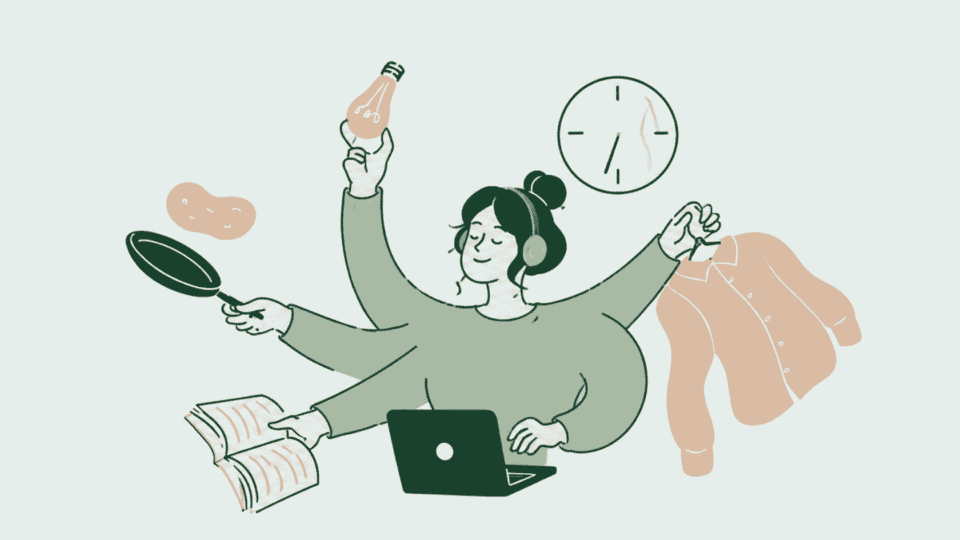
Understanding Why These Two Conditions So Frequently Overlap
Attention Deficit/Hyperactivity Disorder (ADHD) and anxiety are two of the most common mental health challenges people face, and they often show up together. If you’ve been living with one and wondering why the other keeps creeping in, you’re not alone. A fact sheet from the Centre for ADHD Awareness, Canada (CADDAC), notes that up to 50% of adults with ADHD also have an anxiety disorder. Understanding the connection between these two conditions is an important step toward getting the right support.
At Your Path Counselling in Victoria, BC, we work with many clients navigating exactly this overlap. Here’s what we know about why ADHD and anxiety so frequently go hand in hand, and how compassionate, evidence-based support can help.
Key Takeaways
- ADHD and anxiety often co-occur – research suggests nearly half of adults with ADHD also live with an anxiety disorder, according to the Canadian Mental Health Association
- Shared roots, different symptoms – both conditions affect the brain’s regulation systems, but they present differently. Understanding the distinction helps guide effective treatment.
- CBT and other evidence-based approaches – therapies like Cognitive Behavioural Therapy (CBT) are effective for both conditions and can be tailored to address how they interact in your life
- You don’t have to navigate this alone – professional support from registered counsellors in Victoria or online across BC can make a meaningful difference
How ADHD and Anxiety Are Connected
ADHD affects how the brain manages attention, impulse control, and executive function. Anxiety, on the other hand, is characterized by persistent worry, fear, and heightened physical tension. At first glance, they seem like very different experiences.
But here’s where the overlap begins. ADHD makes everyday tasks harder to manage. Deadlines get missed, conversations get derailed, and commitments slip through the cracks. Over time, that pattern of perceived failures creates a cycle of worry and self-doubt that can look a lot like anxiety, and often becomes anxiety.
This is sometimes called secondary anxiety: anxiety that develops as a direct result of living with unmanaged ADHD. According to the Centre for Addiction and Mental Health (CAMH), anxiety disorders are among the most common co-occurring conditions alongside ADHD in adults.
Why ADHD Is Often Mistaken for Anxiety in Adults
Many adults go years, sometimes decades, without an ADHD diagnosis. What they’ve been told they have is anxiety, or depression, or just a tendency to overthink. This is especially common for women, who are statistically more likely to be underdiagnosed with ADHD in Canada (CAMH, 2023).
The symptoms that bring people in for support often include things like:
- Difficulty concentrating or completing tasks
- Restlessness and an inability to wind down
- Chronic worry about forgetting things or making mistakes
- Feeling overwhelmed by seemingly manageable situations
These symptoms are present in both ADHD and anxiety. A careful assessment by a trained professional is the most reliable way to understand what’s actually happening and why it matters for treatment.
What Treating ADHD and Anxiety Together Looks Like
When both ADHD and anxiety are present, treatment works best when it addresses both, not just the most obvious one. A few approaches that our counselling team at Your Path Counselling in Victoria, BC, find especially effective include:
- CBT – CBT helps clients identify and shift thought patterns that fuel both anxious thinking and ADHD-related avoidance. It’s one of the most well-researched approaches for this combination.
- Mindfulness-based approaches – Mindfulness helps build the capacity to pause before reacting, which supports both attention regulation and anxiety management.
- Psychoeducation and skill-building – Understanding how ADHD and anxiety interact in your specific life helps you develop practical strategies that actually fit your needs.
- Personalized support – Because these conditions show up differently in every person, a tailored approach is essential. Our registered counsellors take time to understand your unique experience before recommending a path forward.
You can explore our CBT for anxiety and depression page to learn more about how this approach might work for you.
When to Reach Out for Support
Many people wait longer than they should before seeking support, often because they’re unsure whether what they’re experiencing “counts.” It does.
If you recognize yourself in any of the following situations, connecting with a counsellor could be a meaningful next step:
- You’ve been told you have anxiety, but treatment hasn’t fully helped
- You suspect ADHD might be part of your experience, but have never been assessed
- You find yourself overwhelmed, avoidant, or exhausted by tasks others seem to manage easily
- Worry and distraction are interfering with your relationships, work, or sense of self
Your Path Counselling offers individual counselling in Victoria, BC, and virtual and phone counselling for clients across British Columbia. Wherever you are on your journey, compassionate, personalized support is available.
For general information about ADHD and anxiety in Canada, the Centre for Addiction and Mental Health (CAMH) is an excellent and trusted resource.
Frequently Asked Questions
- Can you have ADHD and anxiety at the same time?
Yes. ADHD and anxiety co-occur frequently, with research from the Canadian Mental Health Association suggesting nearly 50% of adults with ADHD also live with an anxiety disorder. Both conditions affect the nervous system’s regulation, which is part of why they often appear together. A professional assessment can help clarify how each is contributing to your experience. - How do I know if my anxiety is caused by ADHD?
It can be difficult to tell on your own. Anxiety that stems from ADHD, sometimes called secondary anxiety, often centres on fears about forgetting tasks, making mistakes, or letting people down. A registered counsellor or psychologist can help distinguish between the two through careful conversation and, where appropriate, a formal assessment. - Does treating ADHD help with anxiety?
Often, yes. When ADHD is better managed, the cycle of avoidance, shame, and worry that feeds anxiety can ease significantly. That said, some individuals also benefit from targeted anxiety counselling alongside ADHD support. A tailored approach, built with your counsellor, is usually the most effective path. - Does Your Path Counselling in Victoria, BC offer support for ADHD and anxiety?
Yes. Our team of registered counsellors works with individuals navigating a wide range of mental health concerns, including ADHD, anxiety, and how they interact. We offer in-person sessions in Victoria, BC, and online and phone counselling across British Columbia. Book a free 15-minute consultation to be matched with a counsellor who fits your needs.
Take the First Step Toward Support in Victoria BC
Living with ADHD and anxiety together is genuinely challenging, and reaching out for support is a brave decision. At Your Path Counselling, our compassionate team of registered counsellors is here to walk alongside you, whether you’re in Victoria or anywhere across BC.
We offer a free 15-minute consultation to help match you with a counsellor who fits your needs. Sessions are available at a range of price points, including our Affordable Intern Clinic, which starts at $75. Visit our booking page for current rates.Book your free 15-minute consultation today by calling us at 250-818-1623, visiting yourpathcounselling.com, or finding us at 821 Burdett Ave, Suite 303, Victoria BC. Your path forward starts here.